A couple of friends who know I'm an ex-boyscout and generally sort-of-experienced person have asked
why I'm taking a course like the
WBC. My answer is that after 15 years off from serious backpacking, a lot of things have changed. Gear is lighter and better, and the philosophy behind the "low impact" techniques I learned in Scouting have morphed into the "
Leave No Trace" philosophy. The biggest change I can point to is that its now common practice to pack out used TP, whereas it used to be buried. On our Snow Camp trip, where the potential impact is much higher due to large numbers of students in a relatively small area, we'll even be
packing out our human waste.
Another big innovation is the philosophy of "
Ultralight Backpacking". In the old days 35, 40, or 50+ lbs was a normal packload for even a short trip. Using the old "25% rule", someone my size would
expect a load of 50lbs. However, advancements in gear technology and a commitment by some to "do more with less" has brought about a revolution to drive down the weight of packs. Some ultralighters have a base pack weight (gear minus food, water, and fuel) down below
10 lbs! There are some interesting synergies, like a reduced pack weight lets you use lighter boots (or even trail runners) rather than the heavy 3/4-shank all-leather monsters I grew up with. This amplifies the effect of a lighter pack, allowing easier (or more) miles underfoot.
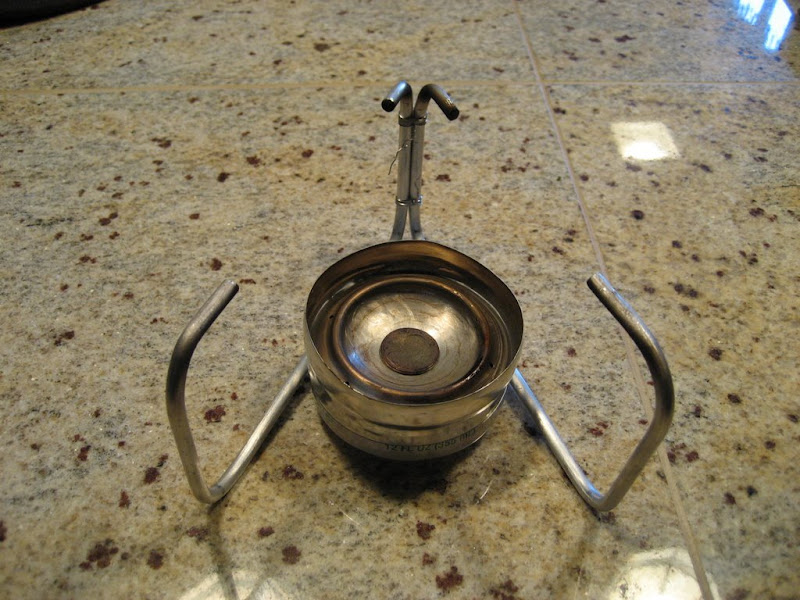
One of the things I've been experimenting with since first learning about Ultralight backpacking, is Alcohol stoves. In particular, super-lightweight stoves made from aluminum cans. The advantages are obvious upon inspection: The stoves are simple (no moving parts), compact (made from cut-down beer cans), and weigh a fraction of the weight of even the lightweight backpacking stoves of commercial manufacture. Compared to my old MSR Whisperlite, the difference is amazing.
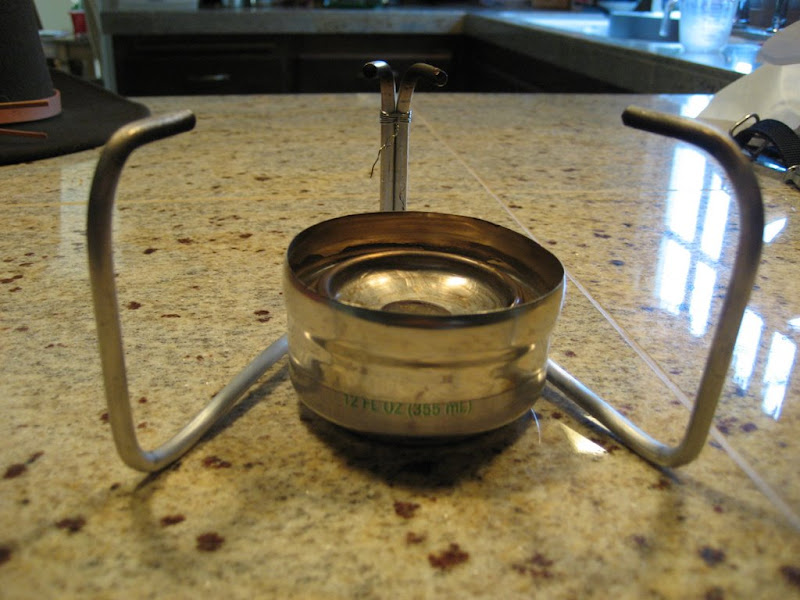
I used Mark Jurey's
Penny Stove example when creating my first stove. I'm sure I'll try another at some point, but for now I'm really happy with the results. This particular stove uses a pair of the Heineken "Keg Cans" for the burner and fuel cups, and a soda can (diet 7-up for those keeping score) for the base/lid. And of course, the namesake penny as the regulator. The stove actually develops a small amount of pressure as the denatured alcohol fuel is vaporized in the cup. The weight of the penny over the central holes is enough to keep the pressure at a good level but allow venting (and an extra central jet) when the pressure gets too high. A "simmer ring" (see bottom of picture below) redirects the jets and slows the evaporation of the fuel, allowing a longer/cooler burn time for simmering food. The design genius in its simplicity. I had some trouble with sealing the construction of mine so I went ahead and "caulked" the cups together with JB weld, but most folks get a pressure-tight fit from interference alone. Impressive!
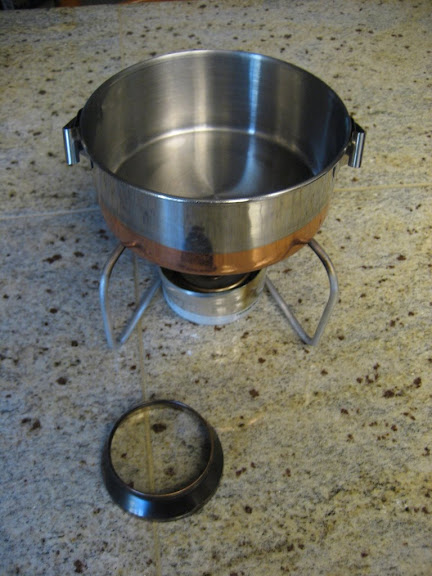
I've also upgraded to a 1.3L Snow Peak titanium cookpot to replace the old stainless pot seen here. Its lighter, despite the greater capacity, and should be a bit more efficient too since its black rather than the reflective exterior. The important metric of this experiment is the weight of the whole cooking "system", as there's more to consider than just the stove. The one disadvantage to alcohol over white gas or pressurized liquid fuel canisters is that alcohol burns at a lower temperature and has a lower overall energy density, meaning that you have to carry more fuel per meal. On the other hand, the denatured alcohol fuel can be carried in a lightweight plastic water bottle or other such vessel (I use a flat-square soap bottle that fits my cookpot well), while white gas has to be carried in a spun aluminum bottle with a gasket and pressurized fuels have their own disposable metal canisters. The massive weight savings of the stove itself, along with the fuel bottles and ancillary bits means that I'd have to be going on a pretty long trip (5+ days?) before the fuel weight difference would overtake and make a white gas stove a lighter alternative.
One of the things I was using the
Car-Camp outing for was to try some new gear and new techniques. It was a good chance to try some stuff without having a failure be totally catastrophic. A new lunch system was tried with great success, and I had mixed feelings about the new sleeping bag and tent I'd rented from
REI. All of these experiences get fed-back into my gear for the next outing. I'll use the next outing to evaluate my new cooking system in the same way, although backyard tests have shown that the time-to-boil for two cups of water is only about a minute longer than with white gas.
Read More...
Summary only...
 First, there was the boating accident that saw two NFL players and their friend lost at sea. One man survived by clinging to the overturned craft, but as of today the Coast Guard search has been called off for the other three. The rescued boater spent nearly two days with the craft before rescue. Even with poor weather, the search could likely have started many hours earlier had a PLB alert been triggered.
 Next comes the story of two off-piste snowboarders in the Alps. Once again, one of the party survived, this time by using a GPS-equipped iPhone and what seems to be a lucky strike with a WiFi signal from a nearby resort. His friend died, though that may have been the result of a fall. In either case, a PLB might have sped up rescue operations for one or both of them. This is also a good reminder that the COSPAS/SARSAT network is a GLOBAL cooperative effort. In this case, the same satellite constellation would have been notified, but rather than US Coast Guard, or Park Rangers, or the RCMP, the appropriate Swiss authorities would have been notified.


 Posts
Posts

