So Jonny Lieberman, one of the people that exist in the form of www.jalopnik.com, is asking the important question, Why do you love cars?
This is one of those litmus test questions that determines if certain folks are the kind you can "hang with", or not. Unfortunately the answer isn't as simple as my usual friend filters: Cheesesteak: Provolone or Whiz? and Designated Hitter: Pro or Con? Get the answer to either of these questions wrong, and I just can't hang with you. Period.
I like lots of people, both Car-People and non-Car-People. But it turns out, that I don't like all Car-People, and some of them just bug the snot out of me. In my youth I would have assumed that all car-people could hang with other car-people. What experience teaches, though, is that there's a kind of formal courtesy thats extended among car-people during the "feeling out" phase that could be mistaken for genuine amity. Instead, it may be a polite acceptance of another character, possibly as tense or awkward as if you were forced to befriend someone with nearly offensive views of your religion or politics.
For example, lets assume you're in the awkward situation of escorting your spouse to a work party, and find yourself seated at a table of ten strangers. You are then introduced to another party guest with the near epithet "This is Bob from accounting, you're both Car-Guys. You should have lots to talk about". Thus begins the "feeling out" of this other Car-Guy. You'll chat about the iron you've owned and driven, and about what your current project may be, but all of this is really about finding out one critical fact about this person, the Why of his love for cars. In the end, you may have found a kindred spirit, or you may have just met another asshole who likes cars, but doesn't like them for the right reasons.
To me the funniest thing about this search for truth, is that the criteria of the Why, the meat of "whether or not I can hang with you", usually has little or nothing to do with the coarse preferences of things like "American versus Foreign", "NASCAR vs. F1", or even "DAF vs. FAF". Even as much I'd rather watch an afternoon of nearly anything instead of a NASCAR race, I'll risk cliche' and say that "some of my best friends are NASCAR fans". No, the question of Why do you love cars? is an important departure from the simpler Do you love cars?, which is all that most "outsiders" ever see of us. It answers a more deeply rooted question about someone's hopes, dreams, and sentiments.
Its about finding a linkage to a common experience, emotion, or hope. Did you grow up working on cars with your Dad? When did you hear your first V12? (Can you even remember when you heard your first V12?) Are you excited about the emerging hybrid technology trend? These are just elements in a complex equation of questions and answers. Each of these reveals a little something about yourself. While complex, this "test" has a definitive answer. In the end, we'll have found that either our paths are destined to cross at an intersection, or to run in together in a caravan.
So Why do I love cars? As we've seen, its a hard question for me to answer in a declarative way. I can offer a dozen stories from my youth that tell the sanguine tale of how I came to kneel at the altar of iron. I could wax rhapsodic about how the art and engineering of cars inspire me and demonstrate the best of what it is to be a creative human being. Instead, I think I will say that the fact that I can't answer the question directly is, in fact, the answer. So tell me your stories about your favorite cars, and maybe we can hang out.
Read More...
Saturday, May 19, 2007


Saturday, February 17, 2007
WBC Sidebar: LNT and Ultralight Backpacking
A couple of friends who know I'm an ex-boyscout and generally sort-of-experienced person have asked why I'm taking a course like the WBC. My answer is that after 15 years off from serious backpacking, a lot of things have changed. Gear is lighter and better, and the philosophy behind the "low impact" techniques I learned in Scouting have morphed into the "Leave No Trace" philosophy. The biggest change I can point to is that its now common practice to pack out used TP, whereas it used to be buried. On our Snow Camp trip, where the potential impact is much higher due to large numbers of students in a relatively small area, we'll even be packing out our human waste.
Another big innovation is the philosophy of "Ultralight Backpacking". In the old days 35, 40, or 50+ lbs was a normal packload for even a short trip. Using the old "25% rule", someone my size would expect a load of 50lbs. However, advancements in gear technology and a commitment by some to "do more with less" has brought about a revolution to drive down the weight of packs. Some ultralighters have a base pack weight (gear minus food, water, and fuel) down below 10 lbs! There are some interesting synergies, like a reduced pack weight lets you use lighter boots (or even trail runners) rather than the heavy 3/4-shank all-leather monsters I grew up with. This amplifies the effect of a lighter pack, allowing easier (or more) miles underfoot.
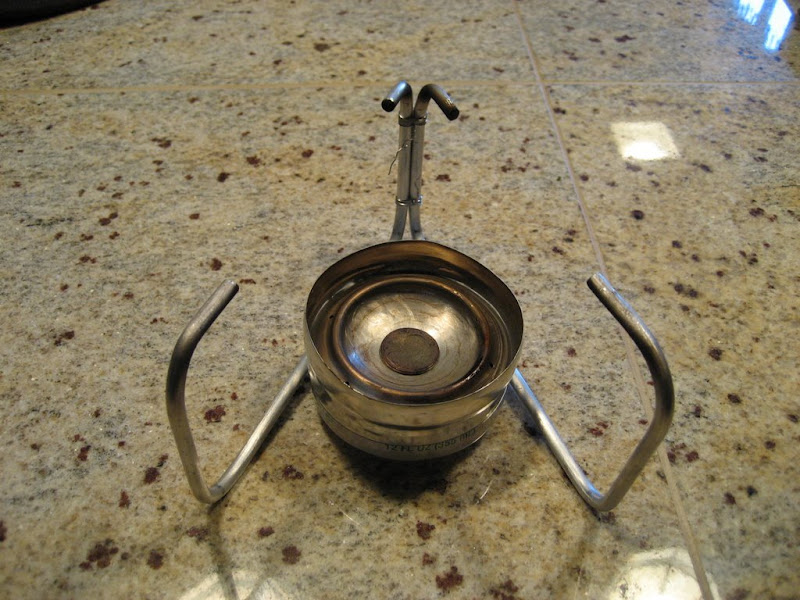 One of the things I've been experimenting with since first learning about Ultralight backpacking, is Alcohol stoves. In particular, super-lightweight stoves made from aluminum cans. The advantages are obvious upon inspection: The stoves are simple (no moving parts), compact (made from cut-down beer cans), and weigh a fraction of the weight of even the lightweight backpacking stoves of commercial manufacture. Compared to my old MSR Whisperlite, the difference is amazing.
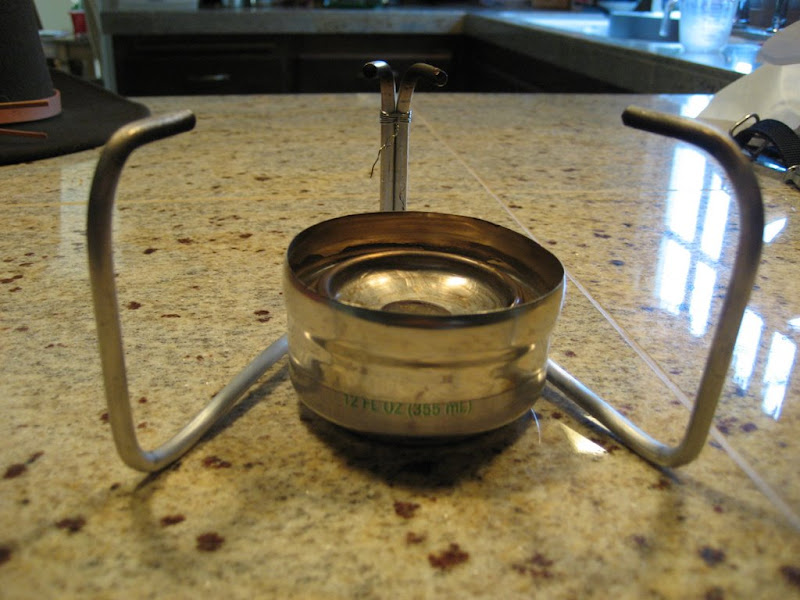 I used Mark Jurey's Penny Stove example when creating my first stove. I'm sure I'll try another at some point, but for now I'm really happy with the results. This particular stove uses a pair of the Heineken "Keg Cans" for the burner and fuel cups, and a soda can (diet 7-up for those keeping score) for the base/lid. And of course, the namesake penny as the regulator. The stove actually develops a small amount of pressure as the denatured alcohol fuel is vaporized in the cup. The weight of the penny over the central holes is enough to keep the pressure at a good level but allow venting (and an extra central jet) when the pressure gets too high. A "simmer ring" (see bottom of picture below) redirects the jets and slows the evaporation of the fuel, allowing a longer/cooler burn time for simmering food. The design genius in its simplicity. I had some trouble with sealing the construction of mine so I went ahead and "caulked" the cups together with JB weld, but most folks get a pressure-tight fit from interference alone. Impressive!
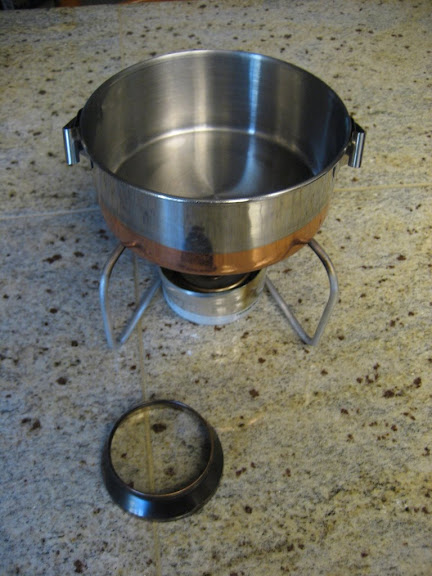 I've also upgraded to a 1.3L Snow Peak titanium cookpot to replace the old stainless pot seen here. Its lighter, despite the greater capacity, and should be a bit more efficient too since its black rather than the reflective exterior. The important metric of this experiment is the weight of the whole cooking "system", as there's more to consider than just the stove. The one disadvantage to alcohol over white gas or pressurized liquid fuel canisters is that alcohol burns at a lower temperature and has a lower overall energy density, meaning that you have to carry more fuel per meal. On the other hand, the denatured alcohol fuel can be carried in a lightweight plastic water bottle or other such vessel (I use a flat-square soap bottle that fits my cookpot well), while white gas has to be carried in a spun aluminum bottle with a gasket and pressurized fuels have their own disposable metal canisters. The massive weight savings of the stove itself, along with the fuel bottles and ancillary bits means that I'd have to be going on a pretty long trip (5+ days?) before the fuel weight difference would overtake and make a white gas stove a lighter alternative.
One of the things I was using the Car-Camp outing for was to try some new gear and new techniques. It was a good chance to try some stuff without having a failure be totally catastrophic. A new lunch system was tried with great success, and I had mixed feelings about the new sleeping bag and tent I'd rented from REI. All of these experiences get fed-back into my gear for the next outing. I'll use the next outing to evaluate my new cooking system in the same way, although backyard tests have shown that the time-to-boil for two cups of water is only about a minute longer than with white gas. Read More...
Another big innovation is the philosophy of "Ultralight Backpacking". In the old days 35, 40, or 50+ lbs was a normal packload for even a short trip. Using the old "25% rule", someone my size would expect a load of 50lbs. However, advancements in gear technology and a commitment by some to "do more with less" has brought about a revolution to drive down the weight of packs. Some ultralighters have a base pack weight (gear minus food, water, and fuel) down below 10 lbs! There are some interesting synergies, like a reduced pack weight lets you use lighter boots (or even trail runners) rather than the heavy 3/4-shank all-leather monsters I grew up with. This amplifies the effect of a lighter pack, allowing easier (or more) miles underfoot.
 One of the things I've been experimenting with since first learning about Ultralight backpacking, is Alcohol stoves. In particular, super-lightweight stoves made from aluminum cans. The advantages are obvious upon inspection: The stoves are simple (no moving parts), compact (made from cut-down beer cans), and weigh a fraction of the weight of even the lightweight backpacking stoves of commercial manufacture. Compared to my old MSR Whisperlite, the difference is amazing.
 I used Mark Jurey's Penny Stove example when creating my first stove. I'm sure I'll try another at some point, but for now I'm really happy with the results. This particular stove uses a pair of the Heineken "Keg Cans" for the burner and fuel cups, and a soda can (diet 7-up for those keeping score) for the base/lid. And of course, the namesake penny as the regulator. The stove actually develops a small amount of pressure as the denatured alcohol fuel is vaporized in the cup. The weight of the penny over the central holes is enough to keep the pressure at a good level but allow venting (and an extra central jet) when the pressure gets too high. A "simmer ring" (see bottom of picture below) redirects the jets and slows the evaporation of the fuel, allowing a longer/cooler burn time for simmering food. The design genius in its simplicity. I had some trouble with sealing the construction of mine so I went ahead and "caulked" the cups together with JB weld, but most folks get a pressure-tight fit from interference alone. Impressive!
 I've also upgraded to a 1.3L Snow Peak titanium cookpot to replace the old stainless pot seen here. Its lighter, despite the greater capacity, and should be a bit more efficient too since its black rather than the reflective exterior. The important metric of this experiment is the weight of the whole cooking "system", as there's more to consider than just the stove. The one disadvantage to alcohol over white gas or pressurized liquid fuel canisters is that alcohol burns at a lower temperature and has a lower overall energy density, meaning that you have to carry more fuel per meal. On the other hand, the denatured alcohol fuel can be carried in a lightweight plastic water bottle or other such vessel (I use a flat-square soap bottle that fits my cookpot well), while white gas has to be carried in a spun aluminum bottle with a gasket and pressurized fuels have their own disposable metal canisters. The massive weight savings of the stove itself, along with the fuel bottles and ancillary bits means that I'd have to be going on a pretty long trip (5+ days?) before the fuel weight difference would overtake and make a white gas stove a lighter alternative.
One of the things I was using the Car-Camp outing for was to try some new gear and new techniques. It was a good chance to try some stuff without having a failure be totally catastrophic. A new lunch system was tried with great success, and I had mixed feelings about the new sleeping bag and tent I'd rented from REI. All of these experiences get fed-back into my gear for the next outing. I'll use the next outing to evaluate my new cooking system in the same way, although backyard tests have shown that the time-to-boil for two cups of water is only about a minute longer than with white gas. Read More...
WBC Outing 3: Hawk Canyon and Borrego Mountain
OK, the next installment of my mad flurry to update on my WBC activities.
Our first overnight outing for the WBC was a car camp to Hawk Canyon and the Borrego Mountain/West Butte area. The trip description called for some time on an unimproved road, so I wussed out and carpooled with the trip's excellent leader Bev. Turns out, she was driving an Outback, so the WRX would probably have been just fine. I'm now taking steps to prep my scoobie for more time on trail head roads like these. (I'll raise the suspension a bit, and fit fore and aft skid plates when I can afford them.)
We'd barely made it to the campsite when things got exciting: A few of our group drove cars even less-suited to the roads than the WRX, (an Avalon and a Jetta), and before we'd even setup camp, we had to dig and push the two of them out of the silty sugar-soft sand of the wash. Lesson learned: If/When I bring the scoobie, I'll be packing a full size shovel, some carpet squares, and a couple of boards.
 After setting up a quick car camp, we discussed the impending weather (rain was possibly in the forecast) and decided to reverse the day's destinations. So we set off on foot for "The Slot", a collection of deep crevasses carved by water into the soft earth. This was a really beautiful area, well shaded and an incredible geological record. Its also clearly part of a living ecosystem, as we found scat, evidence of nests, and even the remains of animals that had been prey to small predators. After hiking down The Slot, I was glad we'd switched Saturday and Sunday's destinations, as this was no place to be after even the slightest amount of rain!
 I experimented with a new lunch system down here in the slot, with great results. A basic lunch consists of a foil pouch or tuna (or two, depending on package size), combined with condiment packets of mayonnaise and dijon mustard boosted from my work cafeteria. Mix ingredients and apply into a pita, and its a very tasty no-cook trail side meal. The part I'm really happy about is that with whole-wheat pita and fish packed in light oil, I've got a really great combination of carbohydrates and protein to keep myself powered up for the hike. (A hard day's backpack will burn upwards of 4000 calories, this is not the time to be dieting lest you "bonk" in a really dangerous spot.) I'll be packing similar lunches on my next couple of outings, as I'm really happy with the weight-to-calories and the low weight and bulk of the leftover packaging that gets packed out.
After the hike was a car-camp only experience: gourmet hors d’oeuvres and smores! (Potluck style!). I panicked when the trip sheet called for "heavy hors d'oeuvres", so when asked, I punted and said "Fondue". It turns out this really raised the bar for everyone else, so the net experience was too much food, and all of it delicious! For certain friends in-the-know, this analogy will have meaning: Imagine an E-party in the clear desert night air! (For everyone who doesn't get this, I pity you.)
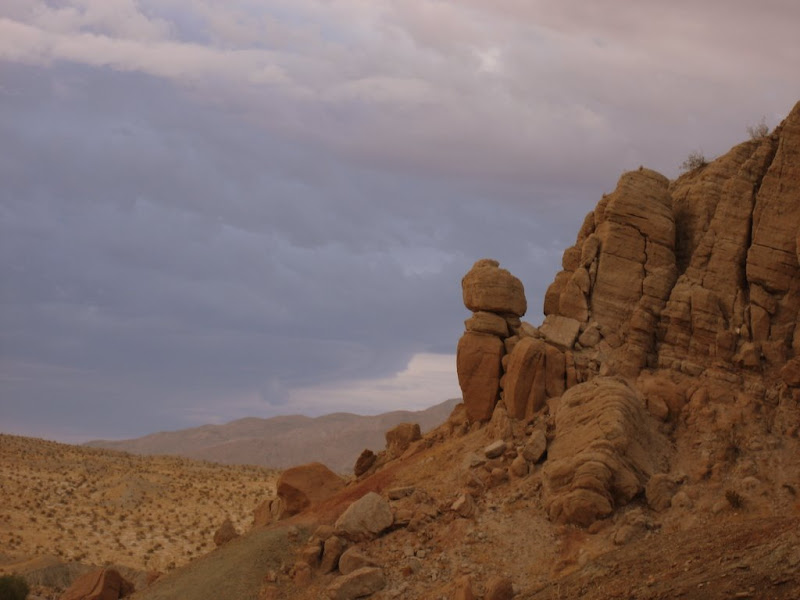 After a windy night, Sunday morning brought the desert beauty I've come to love. I spent the first hour or so after rising exploring Hawk Canyon on my own, and experimenting with various color and ISO settings on my digicam to try to capture the morning light. It never got really cold, but I was glad to have my fleece while leaning on a rock with my mini-tripod trying to setup these shots!
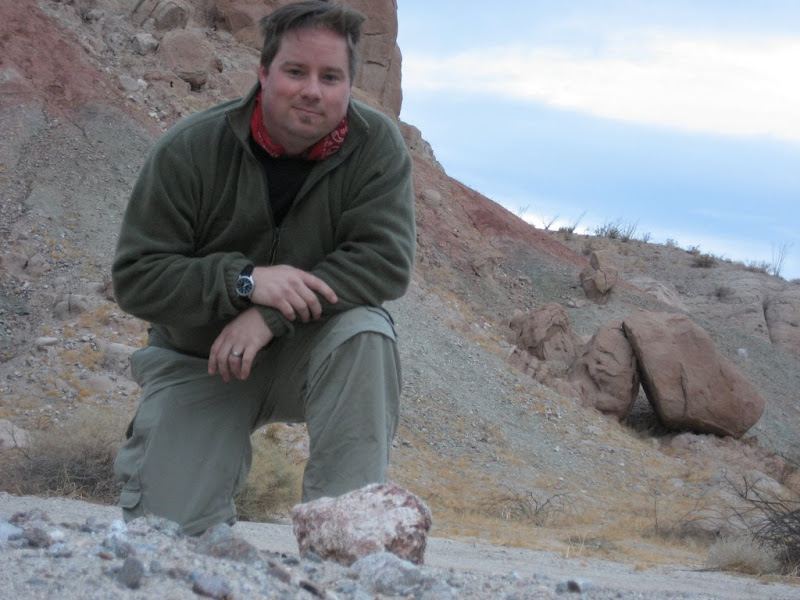 I'm also still working on my self-photography technique, trying to capture myself in as candid a way possible when shooting with a camera 3" off the ground! The lesson learned on this day was: Comb your hair! I made a joke to one of my trip mates that I needed photo evidence for my wife that I really didn't spend the weekend at the tables in Vegas!
Day two also brought another cool hike to the top of Borrego Mountain. This isn't a huge climb, but the valley does drop away from the peak on the north side, so it makes for some cool views from the top. We explored the ridgeline and did some hiking on surfaces that don't show trails well, so we were guided by rock pile Cairns (which the Sierra Club folks call "ducks"). The wind had been blowing on the way up, but after a stop near the peak for lunch, the gusts started to pick up, and I noticed that the weather was finally threatening to make it over the mountains to the northwest. What had been fluffy clouds meandering across the afternoon sky were starting to become darker, denser, and faster moving. I pointed this out to Carol, who was leading this particular hike, and the decision was made to boogie back down the mountain. Going downhill is always faster, but I felt a certain sense of urgency too in the decent. By the time we'd neared the cars, the gusts were close to 40 or 50mph (enough to knock me off balance a couple of times, even with trekking poles). After reaching the cars, saying our goodbyes, then negotiating the dirt roads back to the highway, we got about 15 more minutes before the rain hit, and it hit fairly hard. The timing was good, I'd hate to have been up on that ridge in the wind and wet...
All in all, a really fantastic trip. I can't wait for the Land-Navigation trip next weekend.
As usual, my complete trip gallery can be found here. Read More...
Our first overnight outing for the WBC was a car camp to Hawk Canyon and the Borrego Mountain/West Butte area. The trip description called for some time on an unimproved road, so I wussed out and carpooled with the trip's excellent leader Bev. Turns out, she was driving an Outback, so the WRX would probably have been just fine. I'm now taking steps to prep my scoobie for more time on trail head roads like these. (I'll raise the suspension a bit, and fit fore and aft skid plates when I can afford them.)
We'd barely made it to the campsite when things got exciting: A few of our group drove cars even less-suited to the roads than the WRX, (an Avalon and a Jetta), and before we'd even setup camp, we had to dig and push the two of them out of the silty sugar-soft sand of the wash. Lesson learned: If/When I bring the scoobie, I'll be packing a full size shovel, some carpet squares, and a couple of boards.
 After setting up a quick car camp, we discussed the impending weather (rain was possibly in the forecast) and decided to reverse the day's destinations. So we set off on foot for "The Slot", a collection of deep crevasses carved by water into the soft earth. This was a really beautiful area, well shaded and an incredible geological record. Its also clearly part of a living ecosystem, as we found scat, evidence of nests, and even the remains of animals that had been prey to small predators. After hiking down The Slot, I was glad we'd switched Saturday and Sunday's destinations, as this was no place to be after even the slightest amount of rain!
 I experimented with a new lunch system down here in the slot, with great results. A basic lunch consists of a foil pouch or tuna (or two, depending on package size), combined with condiment packets of mayonnaise and dijon mustard boosted from my work cafeteria. Mix ingredients and apply into a pita, and its a very tasty no-cook trail side meal. The part I'm really happy about is that with whole-wheat pita and fish packed in light oil, I've got a really great combination of carbohydrates and protein to keep myself powered up for the hike. (A hard day's backpack will burn upwards of 4000 calories, this is not the time to be dieting lest you "bonk" in a really dangerous spot.) I'll be packing similar lunches on my next couple of outings, as I'm really happy with the weight-to-calories and the low weight and bulk of the leftover packaging that gets packed out.
After the hike was a car-camp only experience: gourmet hors d’oeuvres and smores! (Potluck style!). I panicked when the trip sheet called for "heavy hors d'oeuvres", so when asked, I punted and said "Fondue". It turns out this really raised the bar for everyone else, so the net experience was too much food, and all of it delicious! For certain friends in-the-know, this analogy will have meaning: Imagine an E-party in the clear desert night air! (For everyone who doesn't get this, I pity you.)
 After a windy night, Sunday morning brought the desert beauty I've come to love. I spent the first hour or so after rising exploring Hawk Canyon on my own, and experimenting with various color and ISO settings on my digicam to try to capture the morning light. It never got really cold, but I was glad to have my fleece while leaning on a rock with my mini-tripod trying to setup these shots!
 I'm also still working on my self-photography technique, trying to capture myself in as candid a way possible when shooting with a camera 3" off the ground! The lesson learned on this day was: Comb your hair! I made a joke to one of my trip mates that I needed photo evidence for my wife that I really didn't spend the weekend at the tables in Vegas!
Day two also brought another cool hike to the top of Borrego Mountain. This isn't a huge climb, but the valley does drop away from the peak on the north side, so it makes for some cool views from the top. We explored the ridgeline and did some hiking on surfaces that don't show trails well, so we were guided by rock pile Cairns (which the Sierra Club folks call "ducks"). The wind had been blowing on the way up, but after a stop near the peak for lunch, the gusts started to pick up, and I noticed that the weather was finally threatening to make it over the mountains to the northwest.
 What had been fluffy clouds meandering across the afternoon sky were starting to become darker, denser, and faster moving. I pointed this out to Carol, who was leading this particular hike, and the decision was made to boogie back down the mountain. Going downhill is always faster, but I felt a certain sense of urgency too in the decent. By the time we'd neared the cars, the gusts were close to 40 or 50mph (enough to knock me off balance a couple of times, even with trekking poles). After reaching the cars, saying our goodbyes, then negotiating the dirt roads back to the highway, we got about 15 more minutes before the rain hit, and it hit fairly hard. The timing was good, I'd hate to have been up on that ridge in the wind and wet...
All in all, a really fantastic trip. I can't wait for the Land-Navigation trip next weekend.
As usual, my complete trip gallery can be found here. Read More...
WBC Outings 1 and 2: Cowles Mountain
OK, OK, I'm late. I know. I'd intended to be blogging this stuff sort of "as it happened", but it turns out the tools to make the blogging easy are at home, and the time I have to blog is the stolen lunch hour at work... Sue me.
 Anyhow, here's the first in a slew of entries to catch up on my activities with the Sierra Club Wilderness Basics Course (hereafter known as WBC) .
Since I grew up in the area, and went to PHHS, in it the shadow of Cowles Mountain, I'm fairly familiar with the WBC's first outing location. Cowles Mountain is probably the most popular hiking trail in the county, likely due to its location and elevation change rather than the interesting (or rather uninteresting) nature of the trail and its views.
The WBC use it as a good conditioning hike and as a method to gauge individual fitness levels for the participants. Its classed as a M3B hike using the Sierra Club Classification (Moderate, 3 Miles, 500-1000 feet of Elevation Change), and is a good yardstick against which to measure later hikes. In fact, the elevation delta is almost exactly 1000 feet from the trail base, so its easy to "guess" how you'd feel on a long M6C, which would be roughly equivalent to climbing Cowles twice. My time? Slower than average, but I think it reflects that I'm a slow climber: 42 minutes for the ascent. (36 was average). One experienced gentleman smoked me with a time of 26 minutes... yeowch.
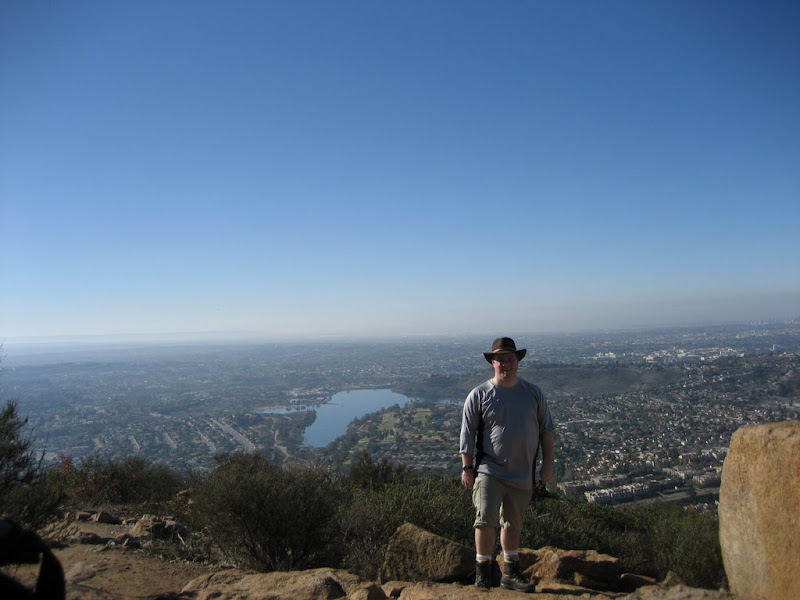 We were required to do it once on either weekend, I chose to do it both times since I was breaking in a new pair of Lowa Trekkers (stiff all-leather), and I need the conditioning after taking so long off from jogging. Just look at that beer gut!
Click here to view my whole album for those hikes. I'll be doing similar albums for each trip as I post the reports here! Read More...
 Anyhow, here's the first in a slew of entries to catch up on my activities with the Sierra Club Wilderness Basics Course (hereafter known as WBC) .
Since I grew up in the area, and went to PHHS, in it the shadow of Cowles Mountain, I'm fairly familiar with the WBC's first outing location. Cowles Mountain is probably the most popular hiking trail in the county, likely due to its location and elevation change rather than the interesting (or rather uninteresting) nature of the trail and its views.
The WBC use it as a good conditioning hike and as a method to gauge individual fitness levels for the participants. Its classed as a M3B hike using the Sierra Club Classification (Moderate, 3 Miles, 500-1000 feet of Elevation Change), and is a good yardstick against which to measure later hikes. In fact, the elevation delta is almost exactly 1000 feet from the trail base, so its easy to "guess" how you'd feel on a long M6C, which would be roughly equivalent to climbing Cowles twice. My time? Slower than average, but I think it reflects that I'm a slow climber: 42 minutes for the ascent. (36 was average). One experienced gentleman smoked me with a time of 26 minutes... yeowch.
 We were required to do it once on either weekend, I chose to do it both times since I was breaking in a new pair of Lowa Trekkers (stiff all-leather), and I need the conditioning after taking so long off from jogging. Just look at that beer gut!
Click here to view my whole album for those hikes. I'll be doing similar albums for each trip as I post the reports here! Read More...
Thursday, February 01, 2007
Hack of the Day: Mini-Hacks!
I stumbled across a pair of nice little tips today, and I love doing my Hack of the Day topics, so here's a tidy collection of random tips that jut might hack your life for the better:
I love Firefox. I love tabbed browsing. I love one-click closing of tabs. But sometimes, due to my own fumble-fingeredness, I miss-click or over-click. Problem solved:
Firefox Tip: Reopen the last closed tab with Ctrl+Shift+T - Lifehacker
Secondly, my memory is pretty good, and most folks loathe playing trivia type games with me, since my noggin is full to leaking with ephemera and minutia. But for the life of me, for inexplicable reasons, I have problems remembering something that others find basic: How many days in the month of March? Or April? Well Lifehacker rescues me again with their MacGyver Tip today:
Use your knuckles to remember each month's days.
I love it, especially because its physical, usually once I've pantomimed or otherwise made handsigns for a memory aid a couple of times, it sticks with me. Stuff like the Left Hand Rule for current and magnetic flux tends to stick pretty well. Here's hoping the days in a month do too! Read More...
I love Firefox. I love tabbed browsing. I love one-click closing of tabs. But sometimes, due to my own fumble-fingeredness, I miss-click or over-click. Problem solved:
Firefox Tip: Reopen the last closed tab with Ctrl+Shift+T - Lifehacker
Secondly, my memory is pretty good, and most folks loathe playing trivia type games with me, since my noggin is full to leaking with ephemera and minutia. But for the life of me, for inexplicable reasons, I have problems remembering something that others find basic: How many days in the month of March? Or April? Well Lifehacker rescues me again with their MacGyver Tip today:
Use your knuckles to remember each month's days.
I love it, especially because its physical, usually once I've pantomimed or otherwise made handsigns for a memory aid a couple of times, it sticks with me. Stuff like the Left Hand Rule for current and magnetic flux tends to stick pretty well. Here's hoping the days in a month do too! Read More...
Subscribe to:
Posts (Atom)

 Posts
Posts

